
10.1.2026 Brittani Yeager
Estimated Reading Time: 7 Minutes
As holiday shopping reaches record levels, fraudsters are counting on something else: our distraction.
Recent data from Iris® Powered by Generali’s Fraud Resolution Center reveals a troubling pattern. Scam cases spike 50% between October and November, with an 87% jump compared to September. At the same time, customer inquiries about fraud protection drop by more than half. The math is clear: we’re most vulnerable when we’re least vigilant – distracted by gift lists, family gatherings, year-end deadlines, and the pressure to make the holidays special.
But when fraud strikes, it’s not just about the financial loss. It’s about what that loss represents and how it impacts our lives.

Key Takeaways
- Fraud surges when vigilance drops: According to Iris Powered by Generali’s Fraud Resolution Center, scam cases spike 50% between October and November, yet customer inquiries about fraud protection drop by more than half. This drop creates a striking vulnerability gap when individuals and families are most distracted.
- The impact of fraud extends far beyond financial losses: 93% of fraud victims experience significant stress from the resolution process, and lower-income victims are twice as likely to feel depressed or hopeless. For many families, stolen funds represent rent, utilities, or groceries – not discretionary spending.
- Understanding scam psychology protects families: Fraudsters exploit emotions like urgency, fear, and trust to bypass individuals’ typical rational thinking. The Anatomy of Falling for a Scam shows how these manipulations work and how to spot warning signs before it’s too late.
- Businesses must lead with education and support: We encourage companies of all sizes and types to share resources like Iris’ The Holiday Hustle: How Fraudsters Steal Joy to understand fraud’s impact across demographics, make fraud resolution assistance accessible, and provide recovery support that addresses both practical and emotional needs.
The Emotional Impact of Identity Fraud
What does it feel like to realize you’ve been scammed during the holidays?
According to Iris’ 2025 Identity & Cybersecurity Concerns Survey, 93% of fraud victims said the resolution process caused them stress, with more than half (52%) describing it as “the worst stress they had ever experienced.” These victims aren’t just dealing with mountains of paperwork and endless phone calls. They’re also grappling with violated trust, compromised security, and financial uncertainty during what’s often the most expensive time of year.
The emotional landscape reveals the depth of this impact:
- 62% of identity theft victims reported frustration
- 61% experienced anger
- 39% felt overwhelmed
- 18% experienced depression or hopelessness
- 5% reported suicidal feelings
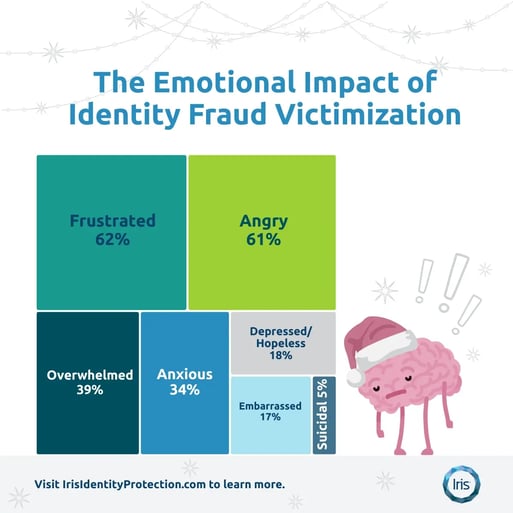
For many families, the stolen funds might represent carefully saved money for gifts, travel to see loved ones, or basic expenses or necessities. The emotional toll and the financial reality aren’t separate problems – they’re connected, each amplifying the other.
The Impact of Fraud & Scams Feels Different Across Generations and Communities
Why do demographics matter when understanding the impact of identity fraud and scams?
Lower-income victims face particularly harsh consequences. They’re twice as likely as higher-income victims to feel depressed or hopeless (22% vs. 11%). When financial margins are already thin, fraud can push families from stability into crisis. The money lost isn’t discretionary spending; it’s often rent, utilities, or groceries.
Generational differences also emerge in how victims process the experience:
- Baby Boomers and Gen X report high levels of anger and frustration (86% and 72% respectively).
- Gen Z experiences overwhelm at 54% and embarrassment at 22%, both significantly higher than among older generations.
- Rural victims report higher levels of frustration (79%) and anger (66%) than urban respondents.
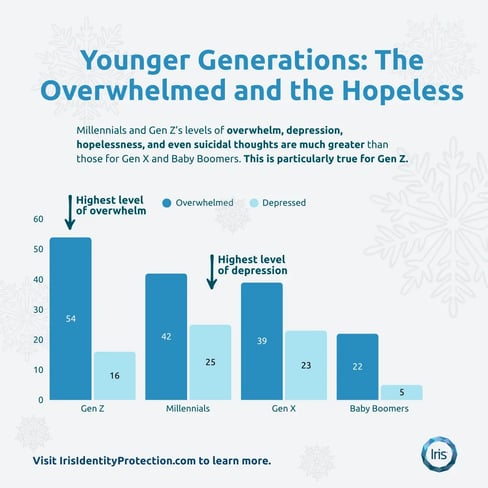
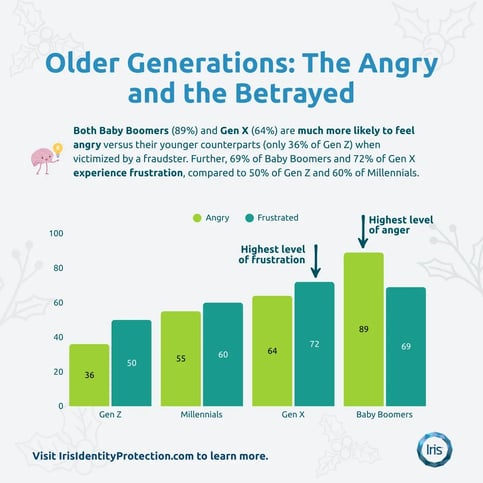
These aren’t just statistics – they’re families, individuals, and communities dealing with both the immediate financial hit and the longer-term psychological impact of having their identity compromised and their trust violated.
Why the Holiday Season is Prime Time for Scammers
“Fraudsters love the holiday season because it’s a perfect storm of distraction and digital activity,” explains Paige Schaffer, CEO of Iris Powered by Generali. “Technology is critical, but education is equally powerful. Businesses can and must do more to warn customers, share prevention strategies, and provide support when it’s needed most.”
The conditions that make holidays joyful also make them susceptible to cyber threats:
- Record-breaking online spending creates countless opportunities for phishing, fake websites, and payment scams
- Time pressure forces rushed decisions without proper verification
- Package-tracking anxiety opens the door for delivery scams
- Charitable giving peaks, providing cover for fake charity fraud
- Gift card purchases become targets for scams
When juggling work deadlines, family obligations, and financial pressure, our ability to spot warning signs drops. Scammers exploit this, knowing that victims often won’t discover the fraud until after the holidays – when bills arrive, and the damage is already done.
Recognizing the Warning Signs of Scams Before It’s Too Late
Why do smart, cautious people still fall victim to scams?
The answer lies in understanding the psychology of manipulation. Scammers exploit fundamental human emotions: urgency, fear, trust, authority, and generosity. They create scenarios that bypass our rational thinking and trigger emotional responses.
That’s why we created The Anatomy of Falling for a Scam. This interactive guide shows exactly how scams manipulate human behavior and how to recognize the warning signs before it’s too late. This shareable resource empowers your customers to identify red flags before becoming victims.
Understanding scam tactics isn’t about blaming victims for falling for them – it’s about arming everyone with the knowledge to protect themselves and their families.
What Businesses Must Do to Help Protect Their Customers from Fraud & Scams This Holiday Season
For companies serving customers, the holiday season demands more than “business as usual.” To enhance brand value and meet rising consumer needs, businesses must:
- Educate at the point of need: Share fraud prevention tips at checkout, in email communications, and across every customer touchpoint. Make awareness part of the holiday experience, not an afterthought that appears only after someone reports fraud.
- Make support accessible: Fraud assistance resources should be immediately visible and easy to understand. Victims shouldn’t have to hunt for help while they’re already in crisis mode.
- Provide comprehensive recovery support: Recognize that victims need practical fraud resolution assistance and empathy — the stress of navigating bureaucracy while worried about the financial impact cannot be understated.

Protecting Families This Holiday Season with Comprehensive Identity Theft Protection & Scam Analysis Solutions
The holiday season should be about connection, generosity, and joy – not about recovering from identity theft or fraud. Yet for millions of people each year, that’s exactly what it becomes.
This season, businesses can demonstrate genuine leadership by prioritizing customers’ identity protection and education. By helping people recognize scams before falling victim, companies protect not just financial security but family wellbeing, holiday plans, and the trust that makes customer relationships possible.
Strengthen your customers’ fraud prevention approach today. Download The Holiday Hustle: How Fraudsters Steal Joy and share The Anatomy of Falling for a Scam with your customers to equip them with the knowledge to protect themselves and their loved ones this holiday season and beyond.

Ready to strengthen your customers’ identity fraud & scam protection strategies?
Contact us today to create a custom identity protection experience your customers will value year-round.