
10.1.2026 Brittani Yeager
Estimated Reading Time: 8 Minutes
Every year, Iris OnWatch surveys over 1,000 American adults about their identity and cybersecurity habits, concerns, and needs. Previously, this resulted in Iris’ annual Holiday Identity Theft Survey. Today, in its second year, this research produces our annual Identity & Cybersecurity Concerns (ICC) Survey – a goldmine of insights for brands looking to better understand and serve their customers’ identity protection needs.
This year’s findings reveal something really interesting: consumer awareness of cyber risks is growing, but the tools and behaviors needed to act on that awareness are not keeping pace. For brands, that gap is a genuine opportunity – to show up, add value, and build lasting trust.
Here’s what the data says, and what it means for your business.

Key Takeaways
- Awareness is up – but action is lagging. Many consumers feel confident about their online safety, but fewer follow all cybersecurity best practices, creating a clear gap between perception and reality.
- Concerns are growing, particularly around AI. Worry about cyber threats is increasing, with AI-driven risks top of mind – even though relatively few consumers have experienced them firsthand.
- Fraud is common and costly. Most Americans have encountered scams, and many have been victims – leading to financial loss, stress, and time spent trying to recover.
- Consumers want built-in, integrated identity protection. People prefer identity protection tools that are easy to access within apps they already use – and many are willing to pay for a comprehensive solution.
Finding #1: Consumers Feel Safe – But Their Habits Tell a Different Story
Most Americans feel good about their digital security. But confidence and action don’t always go hand in hand.
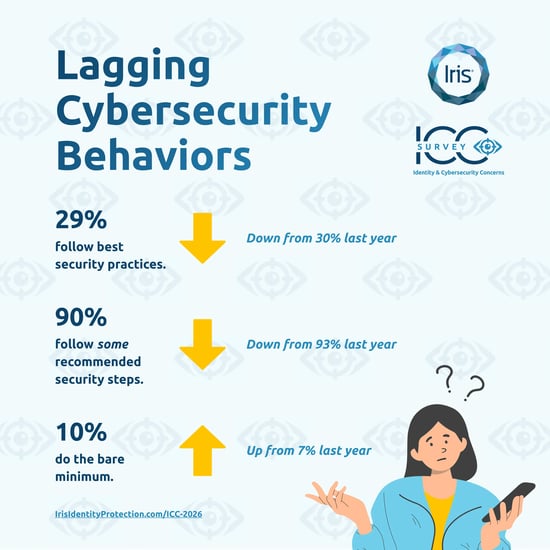
Only 29% of consumers follow all recommended cybersecurity best practices – down from 30% in 2025. And 10% say they do only the bare minimum to use a website or app, up from 7% last year. Meanwhile, the share who follow some security steps dropped from 93% to 90%.
These shifts are small, but the direction matters. As awareness grows, behaviors should follow. The data tells us they’re not – at least not yet. That’s a meaningful signal for any brand thinking about how to support its customers.
Finding #2: Concern Levels are Rising – Especially Around AI
Consumers are paying close attention to the evolving threat landscape, and AI is front and center.
Artificial intelligence is also driving heightened anxiety, with 73% of Americans saying they are extremely or very concerned about its malicious use. Yet relatively few report direct experience with AI-driven scams (9%), underscoring a gap between perceived and immediate threats.
Other top concerns include:
-
Passwords being compromised
-
Personal devices being hacked
-
Children being cyberbullied
-
Falling victim to a scam – concern climbed from 51% in 2025 to 57% in 2026
-
Home title theft
These are the everyday worries of your customers. And they’re growing year over year.
Finding #3: Fraud is Impacting Millions of Americans
The 2026 ICC Survey doesn’t just capture what consumers fear – it captures what they’ve already experienced. And the real-world numbers are striking.
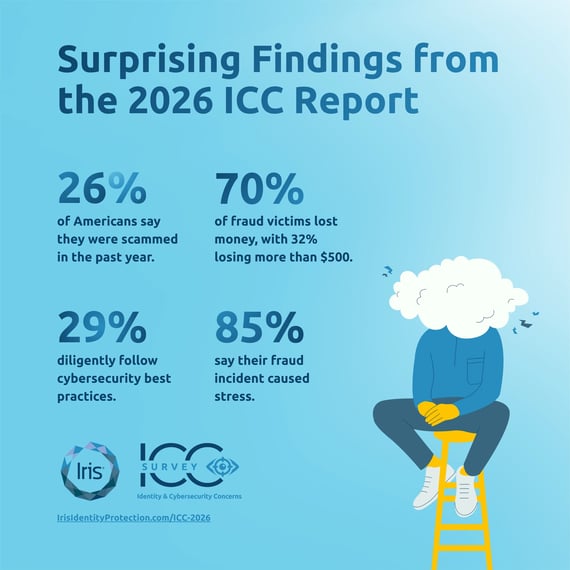
More than two-thirds of Americans (69%) had been exposed to some type of scam in the past 12 months, and one in four adults (26%) fell victim – 8% of whom were victimized multiple times.
For those who had been a victim of fraud or identity theft in the past 2 years, the consequences can be significant:
-
Seven in ten victims of identity theft (70%) reported financial loss, with 32% losing $500 or more – 7% were hit especially hard with losses of $5,000 or more.
-
More than a third of victims (36%) spent several days resolving the fraud incident – and only 6% had access to professional resolution support when they needed it most.
-
Beyond financial losses, 85% of fraud victims say the experience caused significant stress.
Recovery from identity theft and fraud takes time, energy, and often, guidance that most consumers simply don’t have access to.

Finding #4: Access to Identity Protection is Declining
Here’s one of the most actionable data points from this year’s survey: even as awareness of cyber risks increases, access to protection tools is decreasing.
The share of consumers with zero access to any identity protection tool climbed from 18% in 2025 to 22% in 2026. Access to scam support tools dropped sharply – from 28% to just 14% in a single year. And fewer than half of Americans report having access to core tools like credit monitoring (44%) or a password manager (43%).
This isn’t just a consumer behavior problem. It’s a delivery problem. Consumers can’t use tools they don’t have access to – or aren’t delivered in the channels they prefer or expect to use them.
And that’s where businesses like yours play a critical role.
Finding #5: Consumers Are Telling Us Exactly What They Want
This is where the 2026 ICC Survey proves especially useful for brand strategy and product roadmap development. Consumers aren’t asking for more complexity – they’re asking for protection to meet them where they already are.
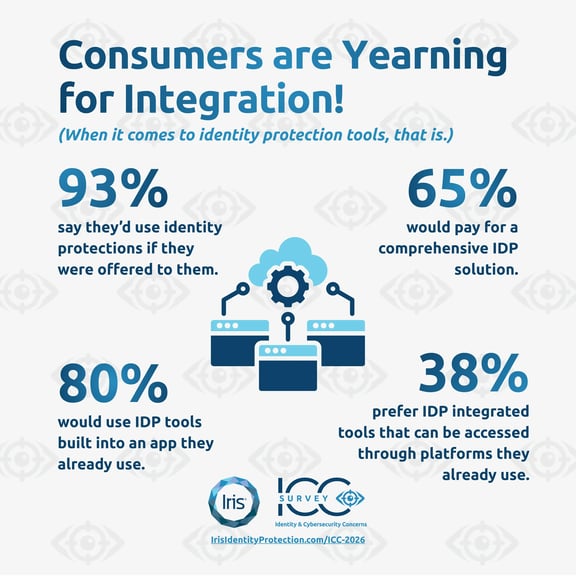
The majority of Americans (80%) say they would use identity protection tools if they were integrated into an app or platform they already use – such as a banking app, an online insurance customer account portal, or a telecom service. And 38% say they would prefer that format. Though it must be noted that 18% of consumers say they would prefer a standalone or dedicated identity protection experience.
This preference gap is telling. That means consumers are more than twice as likely to choose integrated protection over standalone.
And it’s not just about usage – consumers are willing to invest. Most people (65%) say they would pay for a comprehensive identity protection solution. That’s a clear signal: demand exists, and it’s growing. The question is whether organizations will meet it.
Who Do Consumers Trust to Deliver Protection?
Consumers are relatively open about which providers they’d turn to. And when asked who they would want to buy identity protection from, they answered:
-
A cybersecurity company
-
Their bank/credit card provider
-
Their cell phone/telecom provider
-
Their insurers
The theme? Consumers want protection from companies they already know and rely on. That’s a meaningful advantage for organizations across industries like banking, insurance, telecommunications, and beyond. If your customers already trust you with their finances, devices, their home, or their phone plan, they’re likely open to receiving identity protection from you, too.
Why Integration Can Be the Key to Adoption
The data here goes beyond preference – it points to a behavioral truth. People don’t tend to adopt tools they have to seek out and manage separately. They adopt tools that are woven into their daily routines.
Think about how consumers use financial apps. They don’t log in just to check their checking account balance – they open the app, and everything they need is there, including ways to open a new account, a method to send peer-to-peer payments, and much more. Identity protection should work the same way. When it’s embedded into a trusted experience, the barrier to engagement nearly disappears.
What This Means for Your Brand
The 2026 ICC Survey makes one thing very clear: consumer demand for identity protection is real and growing. The brands that will benefit the most are the ones that deliver it seamlessly within experiences consumers already use and trust.
As Iris’ Chief Operating Officer, Erik Nienaber, noted: “Consumers are telling us they don’t want more tools to manage – they want protection to show up where they already are. By embedding protection into existing digital ecosystems, organizations can remove barriers to adoption and make security part of the everyday experience.”
With the Iris identity protection platform, that’s exactly what’s possible. Our full spectrum of identity and cyber protection solutions can be delivered via API integration, embedded micro-experiences, or a dedicated white-labeled portal. However your customers engage with you, Iris can help you meet them there.
Download the full 2026 ICC Key Findings Report to explore all the data.

Connect with our team to start building a protection experience your customers will love – and use.